Tuesday, January 9, 2018

APPLESMELLCOLOUR - Crossover Prog • Spain


APPLESMELLCOLOUR is a Progressive and Symphonic Rock band founded in Tarragona, Spain in 2012. The name of the band is inspired by a poem written by the catalan poet Gabriel Ferrater. 

Without yearning, 
the light is dying on us 
that was honey-colored, and that now
has the apple smell colour

The band is composed of Lluís BARCELÓ (guitar), Àngel ARROYO 'Loti' (bass), Marc CLARAMUNT (drums), Pep ESPASA (guitar, saxophone and flute), Mo ESPASA (keyboard) and Uri MAS (vocals and guitar). After three years of composing, we have recorded our first album: Unscrupulousness. 

Unscrupulousness is a conceptual album which addresses the lack of scruples in its broadest sense: the origins and the development of the universe, the evolution of life on Earth, the massive exploitation of natural resources, current social conflicts and the class struggle in pursuit of a new social paradigm, the emotions and contradictions arising from falling in love and love relationships, the contemplation and the relentless passage of time and finally, the inevitable death which leads us to a universe not governed by scruples or human morality.
You can listen to the full albun at https://applesmellcolour.bandcamp.com/ and follow us at https://www.facebook.com/AppleSmellColour or https://twitter.com/applesmellc


PING PONG - Crossover Prog • Italy


Italian act PING PONG is another example of a 70's Italian band of which little is known. It is believed that they formed in 1971, at that time consisting of Mauro Falzoni (guitars, vocals), Celso Valli (keyboards), Paride Sforza (saxophone, clarinet), Alan Taylor (bass, vocals) and Vittorio Volpe (drums), and they issued their debut album About Time the same year.

Two years later vocalist Giorgio Bertolani joined and contributed to their second full length production Ping Pong in 1973. It is generally believed that the band disbanded shortly after this. Five of the six members would reappear in Italian band Bulldog in 1975, which proved to be another short-lived unit.


Thanks Magal

Monday, January 8, 2018

Psycho Jazz Surf Rock Instrumentals - Shut UP!!!!


These songs form the spine of a fantastic library of Psychedelic Surf Rock Jazz Instrumentals. Each is a colorful, impassioned and delightful performance (or series of performances) clearly aimed at ‘looking for the stars you can’t see’. Each record presents a universe wider than the borders of the medium that contains it, whether LP, CD, MP3s or direct cortical injection. These recordings, which span from the 1960’s to this century, were not just ahead of their time: they are outside of time itself.

ENJOY!!!


Vol 1 - Shut The Fuck Up!!


Vol 2 - Fuck The S(h)ut Up!!


Vol 3 - Fut The Shuck Up!!


Vol 4 - Suck The Fhut Up!!


Saturday, January 6, 2018

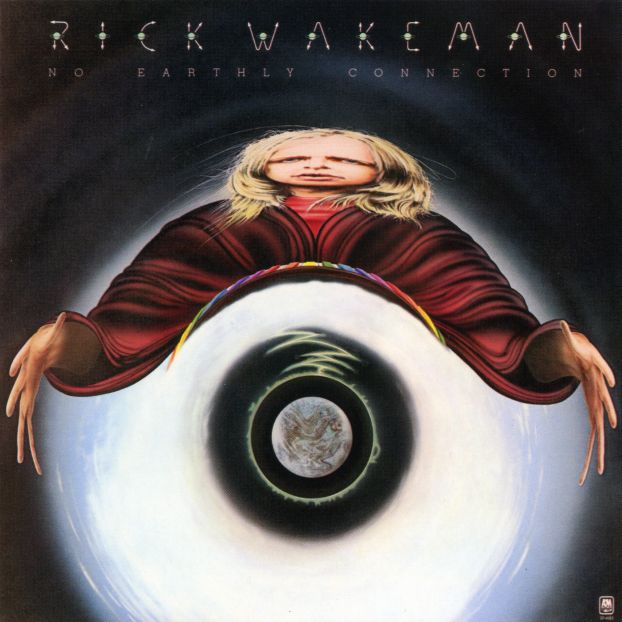
Rick Wakeman - Symphonic Prog


Richard Christopher Wakeman (May 18, 1949 in Perivale, Middlesex, UK)

Rick WAKEMAN is one of the best known progressive musicians and a pioneer in the use of electronic keyboards in rock music. He's also been extremely prolific: in addition to his work as a member of The STRAWBS * (folk-rock band), YES * (post-psychedelic hard rock band), and YES offshoot Anderson Bruford Wakeman Howe (ABWH)*, he has a huge number of session credits, including work with David Bowie, Elton John, BLACK SABBATH, Al Stewart, and Lou Reed. And he's released more solo albums than anyone this side of FRANK ZAPPA. The list below includes 100 titles, including a best-of anthology, a CD EP, and six albums Rick did in collaboration with his son Adam (WwW)*. He also remained associated with YES into the '90s.


Recorded in 1997 and originally released in 1999, the three disc set comprised three volumes, The Sculptor, The Writer and Sketches, and revealed a more sensitive side to RW’s musical nature.

Hendrix In Jazz: A Jazz Tribute To Jimi Hendrix


For this Hendrix project, the idea was to propose the least possible guitar-heroe (except Nguyên Lê) so that the compositions of Hendrix take other shapes and colors. There are, for example, many singers (Youn Sun Nah, Mina Agossi, Térez Montcalm, Ida Sand, Gwen Matthews) and pianists (Francis Lockwood, Joachim Kuhn and Gerri Allen). I wanted especially to highlight the magnificent compositions of Hendrix with their superb melodies and propose several possible jazz directions. At the end of the record we had fun to propose in bonus track musicians who are “out of jazz” but who have, each in their own way, paid a beautiful tribute to Jimi Hendrix: Willy de Ville and Popa Chuby!


La Dusseldorf - Krautrock, Electronic (Germany)


La Düsseldorf was a German band, consisting of onetime Kraftwerk drummer and Neu! multi-instrumentalist Klaus Dinger and occasional Neu! collaborators Thomas Dinger and Hans Lampe. La Düsseldorf was formed after Neu! disbanded following the release of their Neu! '75 record. They released a string of successful albums (with sales totaling over a million) during the late 1970s and early 1980s and were considered highly influential by the likes of Brian Eno and David Bowie, with Bowie going so far as calling La Düsseldorf "the soundtrack of the eighties".

After Neu! broke up in 1975, Klaus Dinger formed La Düsseldorf with his brother Thomas and Hans Lampe, who had both contributed percussion on Neu!'s swan song album. Neu! always displayed a split personality, rooted in the conflicting temperaments and sensibilities of Dinger and guitarist Michael Rother, differences that were dramatized on the duo's final record, where Rother's mellower, melodic atmospherics contrasted with Dinger's anarchic, noisier inclinations. Recorded in 1975, La Düsseldorf's self-titled debut effects something of a compromise between those two aesthetics. Built on driving beats and fleshed out with expansive synth coloring, the 13-minute "Düsseldorf" is a grand, pop-friendly homage to Dinger's hometown. Although its repetitive glide recalls Neu!'s signature Motorik groove, there's something more playful and joyous about Dinger's approach here, especially at the moments when the vocals venture briefly into mock operatics and a glammy piano hammers away. The title track involves similar sonic ingredients but puts them to more concise and aggressive use. As with Neu!'s "Hero" and "After Eight," Dinger injects this song with a speedy, sloganeering rush that anticipates punk; at the same time, though, its incorporation of a soccer-crowd chant seems almost a prescient parody of the brainless variant of punk that would later turn the movement into self-caricature. Indeed, while Dinger was punk avant la lettre, he already had a foot in the post-punk era, something that's most evident on "Silver Cloud" and "Time." These tracks are more minimalist, looking forward to the pared-down, monochromatic austerity that would follow punk's color-cartoon demise. On "Time," an oceanic ebb and flow and somber church-organ sounds eventually yield to a hypnotic, nodding pulse. The album's standout, the mesmerizing instrumental "Silver Cloud," sees prominent synths and mechanical rhythms impart a cool electronic aura that certainly resonated with Bowie and made its presence felt on his Berlin recordings.


Thanks Magal

Friday, January 5, 2018

The Waterboys - Folk Rock (Irish/Scottish)


The Waterboys are an Irish/Scottish folk rock band formed in Edinburgh in 1983 by Scottish musician Mike Scott. The band's membership, past and present, has been composed mainly of musicians from Scotland and Ireland with Edinburgh, Dublin, Spiddal, New York and Findhorn, serving as homes for the group. Mike Scott has remained as the only constant member throughout the band's career. They have explored a number of different styles, but their music is mainly a mix of Celtic folk music with rock and roll. They dissolved in 1993 when Scott departed to pursue a solo career. They reformed in 2000, and continue to release albums and tour worldwide. Scott emphasises a continuity between The Waterboys and his solo work, saying that "To me there's no difference between Mike Scott and the Waterboys; they both mean the same thing. They mean myself and whoever are my current travelling musical companions."

The early Waterboys sound was dubbed "The Big Music" after a song on their second album, A Pagan Place. This style was described by Scott as "a metaphor for seeing God's signature in the world." Waterboys chronicler Ian Abrahams elaborated on this by defining "The Big Music" as, "...a mystical celebration of paganism. It's extolling the basic and primitive divinity that exists in everything ('the oceans and the sand'), religious and spiritual all encompassing. Here is something that can't be owned or built upon, something that has its existence in the concept of Mother Earth and has an ancestral approach to religion. And it takes in and embraces the feminine side of divinity, pluralistic in its acceptance of the wider pantheon of paganism."


"The Big Music" either influenced or was used to describe a number of other bands specializing in an anthemic sound, including U2, Simple Minds, In Tua Nua, Big Country and the Hothouse Flowers.

In the late 1980s, the band became significantly more folk influenced. The Waterboys eventually returned to rock and roll, and have released both rock and folk albums since reforming. Their songs, largely written by Scott, often contain literary references and are frequently concerned with spirituality.


2015 album by Mike Scott and the 'boys. In true Waterboys' style, a spirit of exploration defines the album which was recorded in Nashville, produced by Mike Scott and mixed by the great Bob Clearmountain. Ralph Salmins, a mainstay on drums for the past four years, appears alongside the talismanic Steve Wickham, who weaves a dizzying fuzz fiddle spell on several tracks. Fresh to the ranks are Memphis keyboard player 'Brother' Paul Brown and David Hood, legendary bassist from Muscle Shoals, Alabama. Additional lead guitars are played by 2013 US Waterboy Jay Barclay and Austin soul guitarist Zach Ernst. Guest backing vocalists include southern soul legend Don Bryant. The album cover is a green man photograph titled The King Of Weeds, by New York artists Kahn and Selesnick.