Saturday, March 10, 2012

Ten Years After - Blues Rock (UK)


Ten Years After are an English blues rock band, most popular in the late 1960s and early 1970s. Between 1968 and 1973, Ten Years After scored eight Top 40 albums on the UK Albums Chart. In addition they had twelve albums enter the US Billboard 200, and are best known for tracks such as "I'm Going Home", "Hear Me Calling", "I'd Love to Change the World" and "Love Like a Man". Their musical style consisted of blues rock, and hard rock. The band's core formed in late 1960 as Ivan Jay and the Jaycats. After several years of local success in the Nottingham/Mansfield area, known since 1962 as the Jaybirds and later as Ivan Jay and the Jaymen, Alvin Lee and Leo Lyons founded Ten Years After. Ivan Jay (born Ivan Joseph Harrison, 1939, Nottingham, Nottinghamshire, died in April 2009, USA) sang lead vocals from late 1960 to 1962 and was joined by Ric Lee in August 1965, replacing drummer Dave Quickmire (born David Quickmire, 1940, Mansfield, Nottinghamshire), who had replaced Pete Evans (born Peter Evans, 1940, Mansfield, Nottinghamshire) in 1962. Ray Cooper (born 11 November 1943, Huthwaite, Nottinghamshire) played rhythm guitar, vocals from 1960 to 1962.


In 1966, The Jaybirds moved to London to back The Ivy League. In the same year, Chick Churchill joined the group as keyboard player. That November, the quartet signed a manager, Chris Wright, and changed their name to Blues Trip. Using the name Blues Yard they played one show at the Marquee Club supporting the Bonzo Dog Doo-Dah Band. They again changed their name, to Ten Years After – in honour of Elvis Presley, an idol of Lee's. (This was ten years after Presley's successful year, 1956). Some sources[which?] claim that the name was pulled by Leo Lyons from a magazine, advertising a book, Ten Years After The Suez (referring to the Suez Crisis). The group was the first act booked by the soon-to-be Chrysalis Agency. It secured a residency at the Marquee, and was invited to play at the Windsor Jazz Festival in 1967. That performance led to a contract with Deram, a subsidiary of Decca — the first band Deram signed without a hit single. In October 1967 they released the self-titled debut album, Ten Years After.


In 1968, after touring Scandinavia and the United States, Ten Years After released a second album, the live Undead, with the noteworthy song, "I'm Going Home". They followed this in February 1969 by the studio issue Stonedhenge, a British hit that included another well-known track, "Hear Me Calling" (it was released also as a single, and covered in 1972 by the British glam rock rising stars, Slade). In July 1969, the group appeared at the Newport Jazz Festival, in the first event rock bands were invited to. Between 26–27 July 1969, they appeared at the Seattle Pop Festival held at Gold Creek Park. On 17 August, the band performed a breakthrough American appearance at Woodstock; their rendition of "I'm Going Home" featuring Alvin Lee as lead singer, was featured in both the subsequent film and soundtrack album and catapulted them to star status. In 1970, Ten Years After released "Love Like a Man", the group's only hit in the UK Singles Chart, where it peaked at #10. It was the first record issued with a different playing speed on each side: a three-minute edit at 45rpm, and a nearly eight-minute live version at 33rpm.[citation needed] This song was on the band's fifth album, Cricklewood Green. In August 1970, Ten Years After played the Strawberry Fields Festival near Toronto, and the Isle of Wight Festival 1970. 


In 1971, the band switched labels to Columbia Records and released the hit album A Space in Time, which marked a move toward more commercial material. It featured the group's biggest hit, "I'd Love to Change the World". In late 1972, the group issued their second Columbia album Rock & Roll Music to the World and, in 1973, the live double album Ten Years After Recorded Live. The band subsequently broke up after their final 1974 Columbia album, Positive Vibrations. The members reunited in 1983 to play the Reading Festival, and this performance was later released on CD as The Friday Rock Show Sessions – Live at Reading '83' . In 1988, the members reunited for a few concerts and recorded the album About Time (1989) with producer Terry Manning in Memphis. In 1994, they participated in the Eurowoodstock festival in Budapest. In 2003, the other band members replaced Alvin Lee with Joe Gooch, and recorded the album, Now. Material from the following tour was used for the 2005 double album, Roadworks. Alvin Lee mostly played and recorded under his own name following his split from the band. He died from complications during a routine medical procedure on 6 March 2013. Ric Lee is also currently in a band called Ric Lee's Natural Born Swingers, along with Bob Hall.


Alternative LINK


What sets this release apart from earlier TYA albums is the liberal use of tasty acoustic guitar and plenty of sound effects and studio tricks that complement the overall texture. From tuning a radio dial to open a 12-bar boogie blaster (Baby, Won't You Let Me Rock and Roll You) to backward tape solos (Let The Sky Fall) to 50's Sci-Fi (Here They Come), Alvin Lee and Company were in top form on this 1971 "Time Capsule". Lee also shows that he was no slouch on harmonica as he belts out the blues harp (One Of These Days) along with the nice licks from his trusty hot-rodded Gibson ES-335's. Lee's lyrics ran the full gamut on this collection, from country honk (Once There Was A Time) to otherworldly beings "who fly out of the sun", and "know everything we must learn" (Here They Come). He sings painfully about the pitfalls of drug addiction, but optimistically about recovery (Hard Monkeys, I've Been There Too) and tells us that he notices the World's ills but doesn't know what to do, so he "leaves it up to you" (I'd Love to Change the World).

Leo Lyons (Bass), Chick Churchill (Keyboards) and Ric Lee (Drums) are excellent as usual. This is the one that occupied a particular "Space in Time" for its era, and gets my vote as the best overall TYA album due to the diversity of the material and subject matter. There's just about something for everyone. (Douglas J. Hultsman)


Friday, March 9, 2012

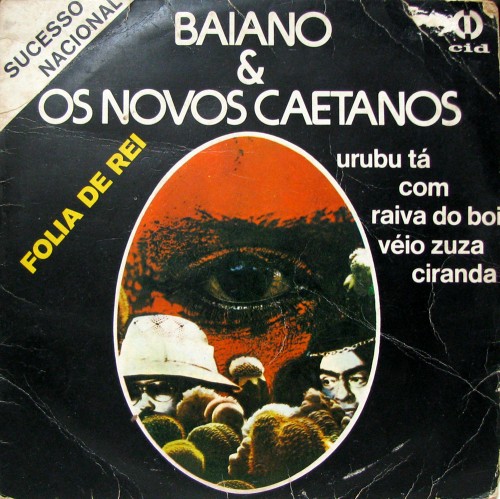
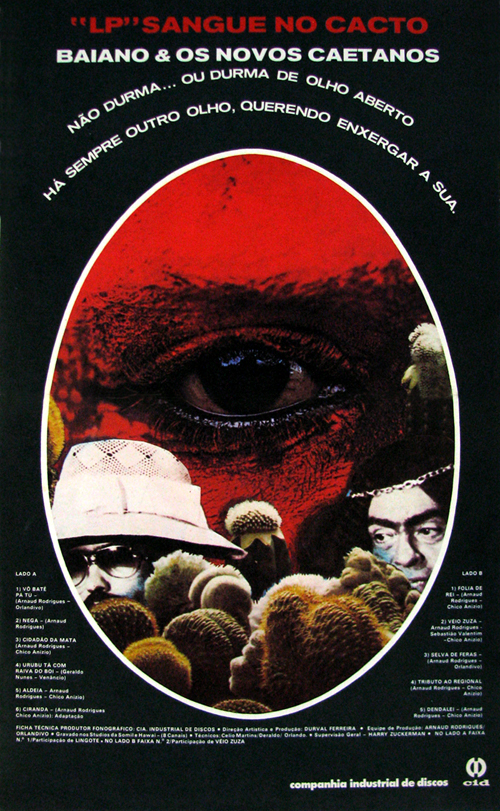
Baiano e os Novos Caetanos


Criado nos anos 70 a partir de um quadro no programa Chico City, Baiano e os Novos Caetanos era composto por Chico Anysio, Arnaud Rodrigues e Renato Piau.


O nome era alusão ao grupo de Pepeu, Baby, Morais Moreira e Paulinho Boca de Cantor, que se auto denominaram Novos Baianos, quando Gil e Caetano se exilaram, durante a ditadura militar. Foram cinco LPs lançados, além dos discos das carreiras individuais dos dois principais criadores das músicas e letras, Chico e Arnaud.


A dupla já compunha junta e tiveram uma música gravada por Toni Tornardo em 1972, sendo que Arnaud fez uma trilha sonora em 1970, Tilim, e também compôs em parceria com Marku Ribas. Em próxima oportunidade será postado por aqui, junto com os demais discos de sua carreira solo.


Fica aqui o acervo de talento, criatividade e humor do grupo.

Abraços!


Baiano e os Novos Caetanos (1974)
Link Alternativo


Sunday, March 4, 2012

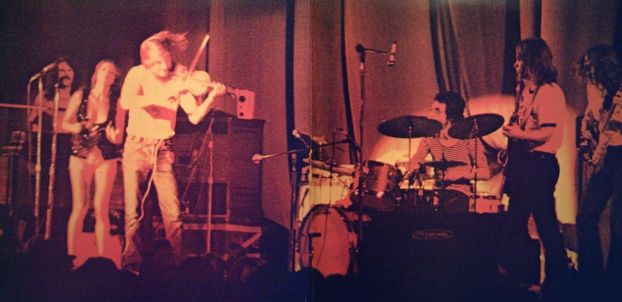
IT'S A BEAUTIFUL DAY - Proto-Prog • United States


It's A Beautiful Day biography (http://www.progarchives.com/artist.asp?id=1397)
Founded in San Francisco, USA in 1967 - Disbanded in 1974 - Reunited in 1997 - Still active as of 2017

Way back in 1969, a haunting little song called "White Bird" could be heard on just about every classic-rock radio station across North America. The song is intrinsically linked to this band, brainchild of David LaFlamme, a virtuoso violinist who frequently jammed alongside the likes of Jerry Garcia and Janis Joplin. Their original line-up included Patti Santos on vocals, David's own wife Linda LaFlamme on keyboards, Hal Wagenet on guitar, Mitchell Holman on bass and Val Fluentes on drums. Through numerous personnel changes, ongoing legal disputes over royalties and various setbacks (the LaFlamme's own divorce and then Linda Laflamme having to hand over her keyboard duties after being struck in the head by a bottle thrown from the audience), the group released three studio albums. A nasty lawsuit then saw David LaFlamme forced out of the band he had created. With a new violinist, keyboard player and still more musicians passing through the revolving doors, the band eventually issued two rather disappointing albums and then fizzled out of the picture. Late-period members such as bassist Bud Cockrell and guitarist David Jenkins resurfaced in PABLO CRUISE while David LaFlamme and Patti Santos enjoyed low-key solo careers. Patti (the voice of "White Bird") was killed in a car accident in 1989.


Their eponymous first album is an American masterpiece of finely crafted, classically inspired folk-rock structured around violinist LaFlamme's virtuosity. A combination of San Francisco Bay Area psychedelia, folk, classical and jazz, it has a very 60ish 'trippy' feel. "Marrying Maiden", their second release, is exceedingly pastoral compared to the first, as the band switched to earthier, country-flavoured rock with cajun spices, bits of jazz and good old-time rock'n roll. By the time the third album "Choice Quality Stuff / Anytime" was released in '72, David LaFlamme was being ousted and the band altogether had seen so many personnel changes it was becoming something of a loose aggregate of the Bay Area 'all stars' (among whom were several members from SANTANA). Although not a bad album, "Choice Quality Stuff" with its distinctly blues-based rock'n roll is nothing remotely similar to the first. Two subsequent LPs, released in '73 and '74 respectively, feature yet another string of new musicians and don't have much to offer to progheads.

The first album is a true American classic and is highly recommended to fans of early RENAISSANCE and ILLUSION. The lighter "Marrying Maiden", still featuring stellar instrumentation and haunting vocals, is a good runner-up.


Saturday, March 3, 2012

BIRTH CONTROL - Heavy Prog • Germany


Birth Control biography (http://www.progarchives.com/artist.asp?id=961)
Formed in Berlin, Germany in 1968 - Disbanded in 1984 - Reformed from 1993-2014 - Active again since 2016

Psychedelic Krautrock to Heavy Progressive Rock with elements of Blues and Jazz

BIRTH CONTROL were formed at the end of sixties. In those early years they played hybrid jazz rock compositions, mainly instrumental. They recorded their first album for Metronome bringing to the fore an accent for humour and provoking thoughts (the name of the band and the album cover illustrate it as well). Their second album "Operation" shows a great improvement in sound, a kind of heavy rock based sound with subtle jazzy arrangements. This album had a great success for the Ohr label (specialised to promote the rise of the German underground rock scene). In 1972, "Believe InThe Pill" was also released for Ohr. After several replacements, the quintet recorded "Rebirth", a progressive heavy rock album. In 1976, "Blackdoor Possibilities" was a commercial failure due to a more mainstream sound and the inclusion of more jazz elements. "Increase" recorded in 1977 marked a return to the hard rock source. BIRTH CONTROL come back to light in the 90s for many reunion albums as "Jungle Life" or "Two Worlds".


Caetano Veloso & Banda Black Rio


Em 1978, Caetano Veloso junta-se à banda Black Rio para fazer uma série de shows. Um desses shows, ao vivo no Teatro Carlos Gomes, na cidade do Rio de Janeiro, foi registrado e lançado só em 2002 na caixa de cd’s “Todo Caetano”. As músicas de Caetano nesses shows, com a banda Black Rio, ganharam uma nova roupagem, com um som mais funky e até um disco.


Brasil no Festival de Montreux

     
     A história do Festival de Jazz de Montreux começa em 1967. O evento durou apenas três dias, tendo como destaques as performances do saxofonista Charles Lloyd e do pianista Keith Jarrett.
     Em 1971, Aretha Franklin se viu convencida a figurar como atração principal do festival daquele ano depois que Claude Nobs a presenteou com uma... caixa de chocolates!
     Em 1973, a artista folk e militante pacifista Joan Baez surpreendeu a todos quando chegou a Montreux montada em um cavalo.
     Foi um incêndio que consumiu parte do cassino de Montreux durante um show de Frank Zappa & The Mothers Of Invention que inspirou o Deep Purple a compor a antológica Smoke on the water.
     1973 também foi o ano que assinalou a primeira aparição de Miles Davis em Montreux. O trompetista voltaria ao palco suíço para mais sete apresentações.
     Em sua juventude, Freddie Mercury, vocalista do Queen, viveu durante vários anos em Montreux. A cidade também serviu de inspiração para a música A winter’s tale, gravada pelo Queen no álbum Made in heaven, pouco antes da morte do cantor.

     O Brasil teve várias participações no Festival e destacamos aqui alguns álbuns que são verdadeiras obras primas.