Saturday, November 15, 2014

Barrabas - Spanish Rock


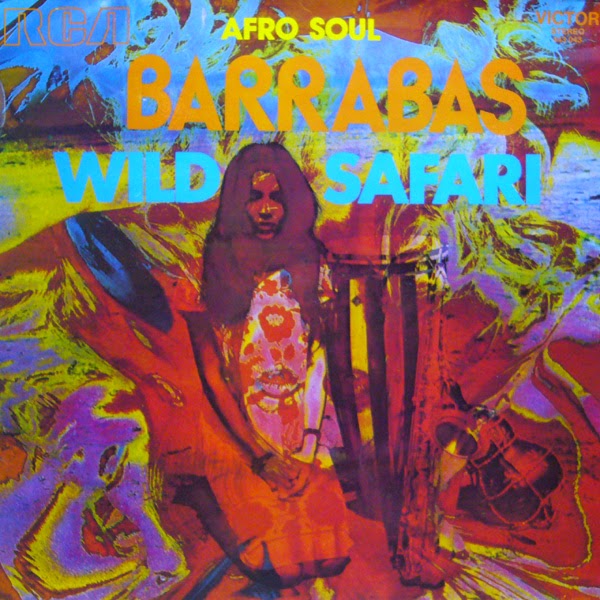
Barrabas era uma banda Espanhola com mistura de Rock, Funk, Soul dos anos 70. Emplacaram dois sucessos "Wild Safari" e "Woman" ambas do disco Wild Safari. Esta banda foi formada por Fernando Arbex e Ricky Morales (ex-Los Brincos), e misturavam os sons psicodélicos com a salsa, o funk.

Segue a biografia do Wikipedia:

Barrabás are a Spanish musical group, most successful in the 1970s and 1980s, when they were led by drummer Fernando Arbex. The group's musical style was initially Latin rock with jazz and funk influences, and later developed into a more disco-orientated sound. Arbex formed Barrabás in 1971 when his previous band, Alacrán, split. He and Alacrán's bass guitarist and vocalist Ignacio "Iñaki" Egaña were joined by several other musicians in preparation for the recording of their debut album Wild Safari released later that year. These were Filipino guitarist brothers Ricky and Miguel Morales; Portuguese keyboard player Juan Vidal and Cuban percussionist, saxophone and flute player Ernesto "Tito" Duarte. Wild Safari spawned the hit singles "Woman" and "Wild Safari" which were successful in various countries across Europe and the Americas, including the USA and Canada.


Egaña left the group in 1973 after his involvement with drugs was made public, and Arbex decided to further reduce his own involvement as a musician, hiring two new members, José Luis Tejada and José María Moll, as vocalist and drummer respectively. Moll had played live with Barrabás from the beginning, with Arbex only playing on Wild Safari. This new line-up recorded two albums, Power in 1973 and ¡Soltad a Barrabás! in 1974. Moll then left the band after disagreements with the other members, and was replaced by Daniel Louis. With the popularity of disco in the mid-1970s, Barrabás moved in that direction and produced a number of minor hits. They disbanded in 1978, and Arbex moved fully towards writing and producing music for other artists. 


The group reformed in 1980 with a new line-up. The Morales brothers, Vidal and Louis were replaced by the returning Moll, Costa Rican guitarist "Koky" Maning, bassist "Susy" Gordaliza and keyboard player Armando Pelayo. This line-up recorded two albums before being dropped by their record label, RCA, and subsequently Tejada, Maning, Gordaliza and Pelayo all left. Miguel Morales and Iñaki Egaña then returned for the recording of the 1983 album Forbidden for CBS. Barrabás continued on a smaller scale afterwards under the leadership of Moll, still accompanied by Egaña and Miguel Morales, with Duarte and other musicians helping out both live and in the studio. A number of albums were recorded in the 1990s, consisting of re-recordings of songs from the 1970s and 1980s. Barrabás founder Fernando Arbex and multi-instrumentalist Tito Duarte both died in 2003.



Wednesday, November 12, 2014

Savatage - Heavy Metal (USA)


Savatage is an American heavy metal band founded by brothers Jon and Criss Oliva in 1979 at Astro Skate in Tarpon Springs, Florida. The band was first called Avatar, but shortly before the release of their debut album Sirens (1983), they changed their name to Savatage as Avatar was already taken by another band.

Savatage has released eleven studio albums, two live albums, four compilations and three EPs. The band first reached substantial commercial success with its third studio album Fight for the Rock (1986), which peaked at number 158 on the Billboard 200. Their next four albums—Hall of the Mountain King (1987), Gutter Ballet (1989), Streets: A Rock Opera (1991) and Edge of Thorns (1993)—were also successful, but more critically acclaimed than Fight for the Rock. On October 17, 1993, six months after the release of Edge of Thorns, guitarist Criss Oliva was killed in a car accident. Following his death, Jon (along with producer Paul O'Neill) decided to continue Savatage in memory of his brother. The band released four more studio albums, and went through several line-up changes before going on an extended hiatus in 2002. During the years—partly even before the hiatus—members founded various new bands such as Jon Oliva's Pain, Trans-Siberian Orchestra, Circle II Circle and Doctor Butcher. On August 2, 2014, Savatage announced that they were reuniting for next year's Wacken Open Air; although they have discussed the possibility of more shows and new music, the band has not performed live since their 2015 appearance at the Wacken Open Air Festival, nor released an official statement regarding their future.


Sunday, November 9, 2014

Pink Floyd and The Soundtrack of Man's First Land on the Moon (BBC Archives)


Pink Floyd é e sempre foi um grupo cheio de enigmas... Seus discos venderam mais de 200 milhões de cópias, e seu som, seus símbolos são ícones e reconhecidos em todo o mundo. Dark Side, Wish You were Here, Animals, The Wall continuam nas prateleiras das Music Stores, e vão resistindo, geração após geração. São reformulados, re-editados e escutados por todo o mundo. Não existe uma banda com essa biografia, e ainda têm folego para lançar mais uma obra prima: "The Endless River", que na minha opinião, é melhor que o Division Bell e seu antecessor. Mesmo tendo uma participação/homenagem póstuma de Rick Wright, a produção está magnífica...


O Pink Floyd sempre foi inovador, desde seus primórdios. Por letras narrando as peripécias de um travesti em Londres, pela música transgressora, pelos shows originais como também pelas biografias de seus integrantes... Apesar de muito ter sido escrito, um fato histórico talvez tenha passado desapercebido por alguns... O Soundtrack do homem pousando na Lua em 1969. E é este o tópico deste post...


Como o Pink Floyd participou da trasmissão do pouso do homem na Lua
Quando o mundo parou na frente da televisão em julho de 1969, Neil Armstrong liderava a equipe da Apolo 11 no primeiro pouso do homem na Lua. Com imagens da BBC1, BBC2 e ITV, esse evento histórico foi visto por mais ou menos seiscentos milhões de espectadores ao longo de oito dias de trasmissão. Com a recente morte de Armstrong, uma velha canção do Pink Floyd chamada "Moonhead" voltou a ser destaque no mundo da música. O motivo? Ao mesmo tempo em que os astronautas chegavam à Lua, David Gilmour, Nick Mason, Roger Waters e Richard Wright faziam uma jam session no estúdio da BBC, criando uma trilha sonora para a aventura lunar. O guitarrista David Gilmour já havia falado sobre isso ao The Guardian, em 2009: "Nós estávamos em um estúdio de TV da BBC tocando para o desembarque. Era uma transmissão ao vivo, e havia um painel de cientistas ao lado do estúdio, com nós. Eu tinha 23 anos". Mesmo figurando em vários bootlegs do grupo ao longo das décadas, “Moonhead” permance inédita na discografia oficial até os dias de hoje.


Já faz mais de 40 anos que a Apollo 11 pousou na lua. Se você estava vivo em 20 de Julho de 1969, as duas grandes notícias eram Neil Armstrong e seu histórico passo na lua e o show de Woodstock. Segue uma reportagem da Rolling Stone:


"Yesterday marked the 40th anniversary of the Apollo 11's landing on the moon. If you were alive on July 20, 1969, you were likely doing one of two things: Watching astronaut Neil Armstrong's historic giant leap for mankind, or packing for Woodstock. Pink Floyd guitarist David Gilmour also watched the lunar landing on July 20th, but recently wrote in The Guardian that he and his bandmates were live-soundtracking the event for the BBC. The resulting jam was called "Moonhead," a song that has frequently popped up on Floyd bootlegs throughout the years but never officially released.

"[Pink Floyd] were in a BBC TV studio jamming to the landing. It was a live broadcast, and there was a panel of scientists on one side of the studio, with us on the other. I was 23," Gilmour writes in the Guardian. "The programming was a little looser in those days, and if a producer of a late-night programme felt like it, they would do something a bit off the wall. Funnily enough I've never really heard it since, but it is on YouTube." (It is in fact on YouTube, as evidenced by the above video, provided by Gilmour's own blog.)

"It was fantastic to be thinking that we were in there making up a piece of music, while the astronauts were standing on the moon. It doesn't seem conceivable that that would happen on the BBC nowadays," Gilmour says in his Guardian piece. "We didn't make any songs out of the jam session. We did, on occasions, do music live that would be a jam session of some sort... And I've heard documentaries where I recognize my music. It's very odd to be watching a documentary and to hear something that you know is yourself, but you have no recognition of when you did it or how. I've never forgotten Moonhead, though. After all, it's not hard to remember exactly where I was."


A música "Moonhead" encontra-se incluída em alguns bootlegs.


Disc One
1. Pow R Toc H (14May67 "Look Of The Week")
2. Astronomy Domine (14May67 "Look Of The Week")
3. The Gnome (25Sep67 "Top Gear")
4. Scarecrow (25Sep67 "Top Gear")
5. Set The Controls For The Heart Of The Sun (25Sep67 "Top Gear")
6. Matilda Mother (25Sep67 "Top Gear")
7. Reaction in G (25Sep67 "Top Gear")
8. Flaming (25Sep67 "Top Gear")
9. Green Onions (12Dec67 "Tomorrow's World")
10. Instrumental (12Dec67 "Tomorrow's World")
11. Vegetable Man (20Dec67 "Top Gear")
12. Scream Thy Last Scream (20Dec67 "Top Gear")
13. Pow R Toc H (20Dec67 "Top Gear")
14. Jugband Blues (20Dec67 "Top Gear")

Disc Two
1. Instrumental (26Mar68 "The Sound Of Change")
2. Set The Controls For The Heart Of The Sun (28Mar68 "Omnibus' All My Loving")
3. The Murderotic Woman (25Jun68 "Top Gear")
4. The Massed Gadgets Of Hercules (25Jun68 "Top Gear")
5. Let There Be More Light (25Jun68 "Top Gear")
6. Julia Dream (25Jun68 "Top Gear")
7. Point Me At The Sky (02Dec68 "Top Gear")
8. Baby Blue Shuffle In D Major (02Dec68 "Top Gear")
9. Embryo (02Dec68 "Top Gear")
10. Interstellar Overdrive (02Dec68 "Top Gear")
11. Daybreak (12May69 "Top Gear")
12. Nightmare (12May69 "Top Gear")
13. The Beginning (12May69 "Top Gear")
14. Beset By Creatures Of The Deep (12May69 "Top Gear")
15. The Narrow Way (12May69 "Top Gear")
16. Moonhead (20Jul69 "Omnibus' What If It's Just Green Cheese?")


Alternative Link


Thanks, Pink Floyd

Thursday, November 6, 2014

Mahavishnu Orchestra


Banda criada em 1970 por John McLaughlin (guitarra), e composta em sua primeira formação por McLaughlin, Billy Cobham (bateria), Rick Laird (baixo), Jerry Goodman (violinos elétrico e acústico) e Jan Hammer (piano elétrico, sintetizadores). Essa formação gravou três discos: In the inner mounting flame (1971), Birds of Fire (1972) e Between Nothingness and Eternity, registro do concerto de despedida da banda no Central Park de New York em 1973. No ano seguinte, McLaughlin decidiu experimentar um som mais orquestral e gravou Apocalypse, com a LSO. A formação da Mahavishnu contava então com Narada Michael Walden (bateria, piano, vocais) Ralphe Armstrong(baixo fretless), Jean-Luc Ponty (violinos elétrico e acústico), Gayle Moran (piano e vocais principais), além de um trio de cordas formado por Steven Kindler (violino), Carol Shieve (viola) e Phillip Hirsch (cello). Além de Apocalypse, gravam Visions of the Emerald Beyond e desfazem a formação .


Em 1976, McLaughlin, já próximo das sonoridades religiosas hindus, decide fazer uma volta à Mahavishnu "elétrica", convocando Ralphe Armstrong, Narada Michael Walden e o tecladista Stu Goldberg para gravar Inner Worlds, um disco de jazz-rock bastante eletrificado e com boa experimentação eletrônica. Após a participação da banda no Festival de Ealing (Inglaterra), no entanto, McLaughlin arquiva a Mahavishnu. Em 1984, após um longo namoro com o jazz europeu e sonoridades acústicas, John McLaughlin reinventa a Mahavishnu Orchestra, com as participações de Mitchell Forman (teclados), Billy Cobham (bateria), Bill Evans (saxofone) e o menino prodígio Jonas Hellborg (baixo). Gravaram dois discos : Mahavishnu (84) e Adventures in Radioland (87).

Palhinhas:


Monday, November 3, 2014

The Sugarman Three - Retro-Funk


The Sugarman 3, sometimes titled The Sugarman Three, is a retro-funk band from New York formed in 1996 by saxophonist Neal Sugarman, Hammond organ player Adam Scone, and drummer Rudy Albin. The band has released three studio albums—Sugar's Boogaloo (1998), Soul Donkey (2000), and Pure Cane Sugar (2002)—and one compilation album, Sweet Spot (2001). The Sugarman 3 are an organ driven soul machine. Originally formed by tenor saxophonist Neal Sugarman as a Boogaloo combo, this band quickly defined it’s sound as a break from the academics of typical soul-jazz by focusing on the soulful funk element of organ music and avoiding the affectations and clichés which too often alienate jazz musicians from the dancefloor crowd.


The Sugarman Three - Sugar's Boogaloo


The Sugarman Three - Soul Donkey


The Sugarman Three - Pure Cane Sugar