Friday, October 7, 2011

Osibisa - Jazz Funk Afro Rock (UK - Ghana)


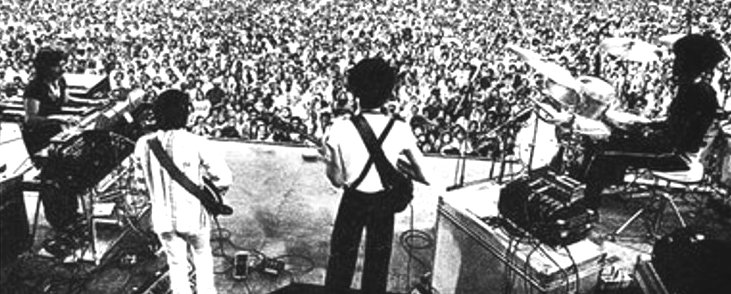
Osibisa is an Afrobeat band, founded in London in 1969 by four expatriate African and three Caribbean musicians. Their music is a fusion of African, Caribbean, jazz, funk, rock, Latin, and R&B. Osibisa were one of the first African-heritage bands to become widely popular and linked with the establishment of world music as a marketable genre.

In Ghana in the 1950s, Teddy Osei (saxophone), Sol Amarfio (drums), Mamon Shareef, and Farhan Freere (flute) played in a highlife band called The Star Gazers. They left to form The Comets, with Osei's brother Mac Tontoh on trumpet, and scored a hit in West Africa with their 1958 song "Pete Pete." In 1962 Osei moved to London to study music on a scholarship from the Ghanaian government. In 1964 he formed Cat's Paw, an early "world music" band that combined highlife, rock, and soul. In 1969 he persuaded Amarfio and Tontoh to join him in London, and Osibisa was born.


Joining them in the first incarnation were Grenadian Spartacus R (bass); Trinidadian Robert Bailey (keyboard); Antiguan Wendell Richardson (lead guitar and lead vocalist); and Nigerians Mike Odumosu and Fred Coker (bass guitar) and Lasisi Amao (percussionist and tenor saxophone). The band spent much of the 1970s touring the world, playing to large audiences in Japan, Australia, India, and Africa. During this time Paul Golly (guitar) and Ghanaians Daku Adams "Potato" and Kiki Gyan were also members of the band. In 1980 Osibisa performed at a special Zimbabwean independence celebration, and in 1983 were filmed onstage at the Marquee Club in London. Changes in the music industry however (punk and disco primarily) meant declining sales for the band, and a series of label changes resulted. The band returned to Ghana to set up a recording studio and theatre complex to help younger highlife musicians. In the 1990s their music was widely anthologised in many CD collections, most of them unauthorised and paying no royalties whatsoever to the band.


In 1996 Osei reformed the band, and many of their past releases began coming out legally on CD. The revitalised band remains active, although Osei has cut back his touring schedule due to the effects of a stroke. Osibisa had an energetic performance in India, at the November Fest 2010 on 28 November 2010 at the Corporation Kalaiarangam in Coimbatore, Tamil Nadu. The name Osibisa was described in lyrics, album notes and interviews as meaning "criss-cross rhythms that explode with happiness" but it actually comes from "osibisaba" the Fante word for highlife. Their style influenced many of the emerging African musicians of the time and even now, as Ace Ghanaian hip-hop music producer Hammer of The Last Two stated that his debut production, Obrafour's Pae Mu Ka album, the highest selling hiplife album to date was inspired by a single song ("Welcome Home") by Osibisa. He also had the chance to work with Kiki Gyan a few days before his death.


Their first two albums featured artwork (and logo) by famed progressive-rock artist Roger Dean (before he became famous for his artwork), depicting flying elephants which became the symbol for the band. The third album, Heads, features a cover by Mati Klarwein, famed for his covers for Santana (Abraxas) and Miles Davis (Bitches Brew). Osibirock features "Negro Attacked by a Jaguar" (1910) by Henri Rousseau. Playing on the original flying elephants theme, the Ultimate Collection set features elephants with tank turrets for heads. In 2009, their Osee Yee album featured the flying elephants once more, this time painted by Freyja Dean (Dean's daughter). Roger Dean's logo for the band continues to be used on every release. One major controversy surrounding the death of legendary keyboardist Kiki Djan, was made public by his daughter Vanessa Sullivan Djan in an interview she granted a local newspaper RazzPaper. In the interview she stated "“They betrayed him! If I’m your friend and I’m into some form of immorality and you watch me go on with it till I crush, that is a form of betrayal! Kiki wrote many songs when he was part of Osibisa but they never gave him credit for that. That was another betrayal.” Teddy Osei, who refuted the reports said in an interview with Let’s Talk Entertainment (LTE) on JoyNews on MultiTV, the group took care of Kiki, who joined the band at age 18, until his death in 2004.”


Musicians
Saxophone: Teddy Osei
Trumpet: Mac Tontoh (born Kweku Adabanka Tonto), Colin Graham, Kenny Wellington
Flute – Abdul Loughty Lasisi Amao
Trombone: Abdul Remiola
Percussion, congas: Kofi Ayivor, Nii Tagoe, Darko Adams 'Daku' Potato , Dinesh Pandit
Drums: Solomon "Sol" Amarfio, KB, Frank Tontoh, Remi Kabaka, Robert Fordjour
Keyboards: Robert Bailey, Bessa Simons, Kwame Yeboah, Chris Jerome, Emmanuel Rentzos, Errol Reid, Kiki Gyan (a.k.a. Kiki Djan), Jean Rousell
Guitars: Kari Bannerman, Gregg Kofi Brown, Wendell "Dell" Richardson, Tony Etoria, Paul Golly, Gordon Hunte, Kwame Yeboah, Jake Solo, Robert Abia Moore, Matola, Winston Delandro
Bass guitar: Spartacus R (born Roy Bedeau), Mike Odumosu, Fred Coker, Victor Mensah, Herman Asafo-Agyei, Gregg Kofi Brown, Jean-Karl Dikoto Mandengue, Abia Moore
Vocals: Gregg Kofi Brown, Teddy Osei, Emmanuel Rentzos, Wendell Richardson, Pamela Carter, Desiree Heslop


The original line-up consisted of Teddy Osei (saxophone, flute, and vocals), Mac Tontoh (trumpet and background vocals), Sol Amarfio (drums and backing vocals), all three from Ghana, Loughty Lassisi Amao (congas, percussion, and horns), from Nigeria, Robert Bailey (keyboards), from Trinidad, Spartacus R (bass), from Grenada, and Wendell Richardson (lead guitar and vocals); together they were also known as "the beautiful seven". The first to exit officially was Spartacus R, who was replaced numerous times, once by the bassist of the group called Assagai and a few times by Jean Mandengue and others. Amao left and was replaced by Kofi Ayivor, who was replaced by Potato but returned to the group later. Richardson left in 1972 and returned in 1975 and henceforth "Welcome Home" and "Sunshine Day". Bailey was replaced by Kiki Gyan before "Sunshine Day"′s release. Richardson was replaced a few times by the likes of guitar wizard Kari Bannerman. Black Welsh guitarist Tony Etoria, who had a hit in 1977 with "I Can Prove It", joined on guitar in the early '80s.


Heads 1972


Black Magic Night 1977


Return to Forever - First Class Fusion Jazz


Return to Forever is a jazz fusion group founded and led by pianist Chick Corea. Through its existence, the band has had many members, with the only consistent bandmate of Corea's being bassist Stanley Clarke. Along with Weather Report and Mahavishnu Orchestra, Return to Forever is often cited as one of the core groups of the jazz-fusion movement of the 1970s. Several musicians, including Clarke, Flora Purim, Airto Moreira and Al Di Meola, first came to prominence through their performances on Return to Forever albums.

After playing on Miles Davis's groundbreaking jazz-fusion albums In a Silent Way and Bitches Brew, Corea formed an avant-garde jazz band called Circle with Dave Holland, Anthony Braxton and Barry Altschul. However, in 1972, after having become a member of Scientology, Corea decided that he wanted to better "communicate" with the audience. This essentially translated into his performing a more popularly accessible style of music, since avant-garde jazz enjoyed a relatively small audience.


Light As A Feather 1972


The Bangles - Rock (USA)


The Bangles are an American pop rock band formed in Los Angeles in 1981. They scored several hit singles during the 1980s, including "Walk Like an Egyptian" (Billboard magazine's number-one single of 1987), "Manic Monday," "A Hazy Shade of Winter," and "Eternal Flame."

Their classic line-up consisted of Michael Steele on bass and vocals, founding members Susanna Hoffs on vocals and rhythm guitar, Debbi Peterson on drums and vocals, and Vicki Peterson on lead guitar and vocals. The band currently consists of Hoffs, Debbi and Vicki Peterson, and Annette Zilinskas.


Sunday, October 2, 2011

Domingão é dia de som, Domingão é dia de ROCK


Não menos controverso, “Live Killers” (1979), do Queen, foi registrado ao longo da tour européia do álbum “Jazz”, mais notadamente na França. As críticas por parte da mídia especializada desta vez se direcionavam à performance morna da banda em muitas canções, fato contestado pelos fiéis seguidores da banda (dentre os quais, este que vos escreve). Outro ponto foram algumas discussões internas e o perfeccionismo da banda, que acabaram por gerar alguns “overdubs” (sempre eles), probleminhas de mixagem em uma ou outra faixa, e a exclusão de alguns temas até então obrigatórios em todos os shows da banda, como a grande “Somebody To Love”, que só foi ter sua primeira versão ao vivo oficial em disco quando do lançamento do CD “Queen On Fire”, gravado em Milton Keynes em 1982. O álbum foi, contudo, responsável pela versão que todos conhecemos de “Love Of My Life”, que se tornou clássico instantâneo nos shows, especialmente no Brasil. E tem ainda “Bohemian Rhapsody”, “Don’t Stop Me Now”, “Brighton Rock” (incluído aí o solo do grande Brian May), a dobradinha “We Will Rock You”/“We Are The Champions”... Apenas anos mais tarde, após o falecimento de Freddie Mercury, com o lançamento póstumo de “Live At Wembley ‘86”, a banda conseguiu unanimidade entre fãs e crítica...


No seu terceiro álbum, o MANOWAR estava realmente honrando o power metal. "Hail to England" tinha algumas das letras extravagantes e a postura já comum da banda, mas a composição e a musicalidade estavam realmente boas. O álbum começa com tudo com a sensacional "Blood of my Enemies" e mantem a qualidade até a épica "Bridge of Death" no final. Esta foi a banda que colocou o poder no power metal.


Esta é a terceira aparição do RAVEN no top 10 em três anos, mas também é sua última. O terceiro álbum era ótimo, mas depois disso a popularidade e qualidade musical deles sumiu. "All for One" mostra os vocais de John Gallagher em alta frequência, e a guitarra de seu irmão Mark em perfeita forma. O New Wave of British Heavy Metal estava se enfraquecendo, mas o RAVEN em 1983 teve seu pico.


Este foi o segundo de três álbuns marcantes lançados em três anos entre 81 e 83. Ele tem o som da banda no seu melhor momento. As músicas combinam o NWOBHM com thrash/speed metal, que seria um gênero que decolaria nos próximos anos. É um álbum poderoso e que sobreviveu bem ao teste do tempo.


O RAVEN fez parte do New Wave of British Heavy Metal, e seu álbum de estreia foi também o melhor deles. Eles sempre foram ofuscados pelos seus contemporâneos, como o IRON MAIDEN e o JUDAS PRIEST, mas o trio britânico soltou alguns álbuns excelentes no início da década. Eles tocavam de maneira rápida e crua, e quase poderiam ser classificados como Speed Metal. Lars Ulrich do METALLICA foi um dos primeiros fãs da banda.


O RIOT era uma banda de metal de Nova Iorque que teve seu início no meio da década de 70. Este álbum foi o melhor deles, e depois dele o vocalista Guy Speranza deixou a banda e eles nunca mais foram os mesmos. É uma banda que nunca teve muito sucesso comercial e muitos fãs de metal não estão cientes da sua existência. O início do catálogo deles merece ser explorado, especialmente este álbum, que é excelente e melódico, com diversos hinos do rock de arena.


O DIAMOND HEAD era uma banda que teve uma forte influência no METALLICA, que depois acabaria por fazer covers de várias de suas músicas. "Am I Evil", "Helpless" e "The Prince" são deste álbum de sete músicas


Banda Black Rio - Brazil Funk & Soul


Banda Black Rio is a Brazilian musical group from Rio de Janeiro that was formed in 1976. It has a repertoire based on funk but also including samba, jazz and Brazilian rhythms.

Compared to other soul-funk groups, such as Kool & the Gang and Earth, Wind and Fire, Banda Black Rio developed a particular style of instrumental soul music fusing together elements from a number of genres.

WEA had just been established in Brazil, and they wanted to create a band that could be the pioneer of this movement; so they contacted Oberdan Magalhães, a renowned saxophonist, who accepted the challenge together with trumpet player Barrosinho, keyboards and arrangements Cristovao Bastos, guitars and arrangements Claudio Stevenson, bass Jamil Joanes, trombone Lucio Silva and formed Banda Black Rio. Mixing R&B, jazz and samba elements, Banda Black Rio was one of the first to undertake the fusion of Essential Brazilian Music with International Black Music. They were brought together in 1976. Banda Black Rio was often associated with soul-funk bands such as Kool & the Gang, Earth, Wind and Fire, Herbie Hancock, and others.

The band recorded six albums: the instrumental Maria Fumaça (1977), Gafieira Universal (1978) and Saci Pererê (1980). They were also invited to take part in other artists' albums, such as Luiz Melodia, Raul Seixas, Sandra de Sa, Emilio Santiago, Alcione, Carlos Dafe, and recorded a live album with Caetano Veloso entitled Bicho Baile Show and Global Brazilians in 1985. The album was released in 1995.

The present band are the sons of the original members. Two albums came out from this new generation of Black Rio. Rebirth released in the 2001 and Supernova samba funk in 2012.


Friday, September 30, 2011

Ramones - Punk Rock (USA)


The Ramones were an American punk rock band that formed in the New York City neighborhood of Forest Hills, Queens, in 1974. They are sometimes cited as the first true punk rock group. Despite achieving only limited commercial success, the band was influential in the United States and the United Kingdom.

All of the band members adopted pseudonyms ending with the surname "Ramone", although none of them were biologically related. They performed 2,263 concerts, touring virtually nonstop for 22 years. In 1996, after a tour with the Lollapalooza music festival, the band played a farewell concert and disbanded. By 2014, all four of the band's original members had died – lead singer Joey Ramone (1951–2001), bass guitarist Dee Dee Ramone (1951–2002), guitarist Johnny Ramone (1948–2004) and drummer Tommy Ramone (1949–2014).


Recognition of the band's importance built over the years, and are now mentioned in many assessments of all-time great rock music, such as number 26 in the Rolling Stone magazine list of the "100 Greatest Artists of All Time" and number 17 in VH1's "100 Greatest Artists of Hard Rock". In 2002, the Ramones were ranked the second-greatest band of all time by Spin magazine, trailing only by the Beatles. On March 18, 2002, the original four members and Tommy's replacement on drums, Marky Ramone, were inducted into the Rock and Roll Hall of Fame on their first year of eligibility, though Joey had died by then. In 2011, the group was awarded a Grammy Lifetime Achievement Award.


Wednesday, September 28, 2011

Ten Years After - Blues Rock (UK)


Ten Years After are an English blues rock band, most popular in the late 1960s and early 1970s. Between 1968 and 1973, Ten Years After scored eight Top 40 albums on the UK Albums Chart. In addition they had twelve albums enter the US Billboard 200, and are best known for tracks such as "I'm Going Home", "Hear Me Calling", "I'd Love to Change the World" and "Love Like a Man". Their musical style consisted of blues rock, and hard rock. The band's core formed in late 1960 as Ivan Jay and the Jaycats. After several years of local success in the Nottingham/Mansfield area, known since 1962 as the Jaybirds and later as Ivan Jay and the Jaymen, Alvin Lee and Leo Lyons founded Ten Years After. Ivan Jay (born Ivan Joseph Harrison, 1939, Nottingham, Nottinghamshire, died in April 2009, USA) sang lead vocals from late 1960 to 1962 and was joined by Ric Lee in August 1965, replacing drummer Dave Quickmire (born David Quickmire, 1940, Mansfield, Nottinghamshire), who had replaced Pete Evans (born Peter Evans, 1940, Mansfield, Nottinghamshire) in 1962. Ray Cooper (born 11 November 1943, Huthwaite, Nottinghamshire) played rhythm guitar, vocals from 1960 to 1962.


In 1966, The Jaybirds moved to London to back The Ivy League. In the same year, Chick Churchill joined the group as keyboard player. That November, the quartet signed a manager, Chris Wright, and changed their name to Blues Trip. Using the name Blues Yard they played one show at the Marquee Club supporting the Bonzo Dog Doo-Dah Band. They again changed their name, to Ten Years After – in honour of Elvis Presley, an idol of Lee's. (This was ten years after Presley's successful year, 1956). Some sources[which?] claim that the name was pulled by Leo Lyons from a magazine, advertising a book, Ten Years After The Suez (referring to the Suez Crisis). The group was the first act booked by the soon-to-be Chrysalis Agency. It secured a residency at the Marquee, and was invited to play at the Windsor Jazz Festival in 1967. That performance led to a contract with Deram, a subsidiary of Decca — the first band Deram signed without a hit single. In October 1967 they released the self-titled debut album, Ten Years After.


In 1968, after touring Scandinavia and the United States, Ten Years After released a second album, the live Undead, with the noteworthy song, "I'm Going Home". They followed this in February 1969 by the studio issue Stonedhenge, a British hit that included another well-known track, "Hear Me Calling" (it was released also as a single, and covered in 1972 by the British glam rock rising stars, Slade). In July 1969, the group appeared at the Newport Jazz Festival, in the first event rock bands were invited to. Between 26–27 July 1969, they appeared at the Seattle Pop Festival held at Gold Creek Park. On 17 August, the band performed a breakthrough American appearance at Woodstock; their rendition of "I'm Going Home" featuring Alvin Lee as lead singer, was featured in both the subsequent film and soundtrack album and catapulted them to star status. In 1970, Ten Years After released "Love Like a Man", the group's only hit in the UK Singles Chart, where it peaked at #10. It was the first record issued with a different playing speed on each side: a three-minute edit at 45rpm, and a nearly eight-minute live version at 33rpm.[citation needed] This song was on the band's fifth album, Cricklewood Green. In August 1970, Ten Years After played the Strawberry Fields Festival near Toronto, and the Isle of Wight Festival 1970. 


In 1971, the band switched labels to Columbia Records and released the hit album A Space in Time, which marked a move toward more commercial material. It featured the group's biggest hit, "I'd Love to Change the World". In late 1972, the group issued their second Columbia album Rock & Roll Music to the World and, in 1973, the live double album Ten Years After Recorded Live. The band subsequently broke up after their final 1974 Columbia album, Positive Vibrations. The members reunited in 1983 to play the Reading Festival, and this performance was later released on CD as The Friday Rock Show Sessions – Live at Reading '83' . In 1988, the members reunited for a few concerts and recorded the album About Time (1989) with producer Terry Manning in Memphis. In 1994, they participated in the Eurowoodstock festival in Budapest. In 2003, the other band members replaced Alvin Lee with Joe Gooch, and recorded the album, Now. Material from the following tour was used for the 2005 double album, Roadworks. Alvin Lee mostly played and recorded under his own name following his split from the band. He died from complications during a routine medical procedure on 6 March 2013. Ric Lee is also currently in a band called Ric Lee's Natural Born Swingers, along with Bob Hall.


What sets this release apart from earlier TYA albums is the liberal use of tasty acoustic guitar and plenty of sound effects and studio tricks that complement the overall texture. From tuning a radio dial to open a 12-bar boogie blaster (Baby, Won't You Let Me Rock and Roll You) to backward tape solos (Let The Sky Fall) to 50's Sci-Fi (Here They Come), Alvin Lee and Company were in top form on this 1971 "Time Capsule". Lee also shows that he was no slouch on harmonica as he belts out the blues harp (One Of These Days) along with the nice licks from his trusty hot-rodded Gibson ES-335's. Lee's lyrics ran the full gamut on this collection, from country honk (Once There Was A Time) to otherworldly beings "who fly out of the sun", and "know everything we must learn" (Here They Come). He sings painfully about the pitfalls of drug addiction, but optimistically about recovery (Hard Monkeys, I've Been There Too) and tells us that he notices the World's ills but doesn't know what to do, so he "leaves it up to you" (I'd Love to Change the World).

Leo Lyons (Bass), Chick Churchill (Keyboards) and Ric Lee (Drums) are excellent as usual. This is the one that occupied a particular "Space in Time" for its era, and gets my vote as the best overall TYA album due to the diversity of the material and subject matter. There's just about something for everyone. (Douglas J. Hultsman)


Mais uma sugestão do Monster. ( Ten Years After (1967) )