Saturday, May 17, 2014

Captain Beefheart - An Underground Artist


Impossível ficar impassível escutando o som de Captain Beefheart... Na primeira ouvida, parece distorcido, desconexo... Ouvindo com mais atenção, nota-se sua complexidade, suas nuances, sua letra forte. Um grande artista, músico, escultor, pintor, poeta, que cultivou admiradores como John Lennon, Paul Mcartney, Frank Zappa... Aliás, amigo adolescente de Frank Zappa, onde suas histórias e estórias se misturam, sendo impossícel discernir quem influenciou quem... Segue nossa homenagem a mais este bardo underground...


Don Van Vliet (born Don Glen Vliet; January 15, 1941 – December 17, 2010) was an American musician, singer-songwriter and artist best known by the stage name Captain Beefheart. His musical work was conducted with a rotating ensemble of musicians called the Magic Band (1965–1982), with whom he recorded 13 studio albums. Noted for his powerful singing voice with its wide range, Van Vliet also played the harmonica, saxophone and numerous other wind instruments. His music blended rock, blues and psychedelia with avant-garde and contemporary experimental composition. Beefheart was also known for exercising an almost dictatorial control over his supporting musicians, and for often constructing myths about his life.


During his teen years in Lancaster, California, Van Vliet developed an eclectic musical taste and formed "a mutually useful but volatile" friendship with Frank Zappa, with whom he sporadically competed and collaborated. He began performing with his Captain Beefheart persona in 1964 and joined the original Magic Band line-up, initiated by Alexis Snouffer, in 1965. The group drew attention with their cover of Bo Diddley's "Diddy Wah Diddy", which became a regional hit. It was followed by their acclaimed debut album Safe as Milk, released in 1967 on Buddah Records. After being dropped by two consecutive record labels, they signed to Zappa's Straight Records. As producer, Zappa granted Beefheart unrestrained artistic freedom in making 1969's Trout Mask Replica, which ranked 58th in Rolling Stone magazine's 2003 list of the 500 greatest albums of all time. In 1974, frustrated by lack of commercial success, he released two albums of more conventional rock music that were critically panned; this move, combined with not having been paid for a European tour, and years of enduring Beefheart's abusive behavior, led the entire band to quit. Beefheart eventually formed a new Magic Band with a group of younger musicians and regained contemporary approval through three final albums: Shiny Beast (Bat Chain Puller) (1978), Doc at the Radar Station (1980) and Ice Cream for Crow (1982).


Van Vliet has been described as "...one of modern music's true innovators" with "...a singular body of work virtually unrivalled in its daring and fluid creativity." Although he achieved little commercial or mainstream critical success, he sustained a cult following as a "highly significant" and "incalculable" influence on an array of new wave, punk, post-punk, experimental and alternative rock musicians. Known for his enigmatic personality and relationship with the public, Van Vliet made few public appearances after his retirement from music in 1982. He pursued a career in art, an interest that originated in his childhood talent for sculpture, and a venture which proved to be his most financially secure. His expressionist paintings and drawings command high prices, and have been exhibited in art galleries and museums across the world. Van Vliet died in 2010, having suffered from multiple sclerosis for many years.

Palhinha:

Mais uma, que o som é muito bom...


Seguem alguns álbuns para conhecer a obra deste grande músico:


Critically acclaimed as Van Vliet's magnum opus, Trout Mask Replica was released as a 28 track double album in June 1969 on Frank Zappa's newly formed Straight Records label. First issues, in the USA, were auto-coupled and housed in the black 'Straight' liners along with a 6-page lyric sheet illustrated by the Mascara Snake. A school-age portrait of Van Vliet appears on the front of this sheet, while the cover of the gatefold enigmatically shows Beefheart in a 'Quaker' hat, obscuring his face with the head of a fish. The fish is a carp – arguably a 'replica' for a trout, photographed by Cal Schenkel.


Lick My Decals Off, Baby (1970) continued in a similarly experimental vein. An album with "...a very coherent structure" in the Magic Band's "...most experimental and visionary stage," it was Van Vliet's most commercially successful in the United Kingdom, spending twenty weeks on the UK Albums Chart and peaking at number 20. An early promotional music video was made of its title song, and a bizarre television commercial was also filmed that included excerpts from Woe-Is-uh-Me-Bop, silent footage of masked Magic Band members using kitchen utensils as musical instruments, and Beefheart kicking over a bowl of what appears to be porridge onto a dividing stripe in the middle of a road. The video was rarely played but was accepted into the Museum of Modern Art, where it has been used in several programs related to music.


The atmosphere of The Spotlight Kid is, according to one critic, "definitely relaxed and fun, maybe one step up from a jam." And though "things do sound maybe just a little too blasé," "Beefheart at his worst still has something more than most groups at their best." The music is simpler and slower than on the group's two previous releases, the uncompromisingly original Trout Mask Replica and the frenetic Lick My Decals Off, Baby. This was in part an attempt by Van Vliet to become a more appealing commercial proposition as the band had made virtually no money during the previous two years—at the time of recording, the band members were subsisting on welfare food handouts and remittances from their parents. Van Vliet offered that he "got tired of scaring people with what I was doing... I realized that I had to give them something to hang their hat on, so I started working more of a beat into the music." Magic Band members have also said that the slower performances were due in part to Van Vliet's inability to fit his lyrics with the instrumental backing of the faster material on the earlier albums, a problem that was exacerbated in that he almost never rehearsed with the group.


By the fall of 1975 the band had completed their European tour, with further U.S. dates in the New Year of 1976, supporting Zappa along with Dr. John. Van Vliet now found himself stuck in a web of contractual hang-ups. At this point Zappa had begun to extend a helping hand, with Vliet already having performed incognito as "Rollin' Red" on Zappa's One Size Fits All (1975) and then joining with him on the Bongo Fury album and its later support tour. Two Vliet-penned numbers on the Bongo Fury album are "Sam with the Showing Scalp Flat Top" and "Man with the Woman Head". The form, texture and imagery of this album's first track, "Debra Kadabra", sung by Vliet, has 'angular similarities' to the work he would later produce in his next three albums. On the Bongo Fury album Vliet also sings "Poofter's Froth Wyoming Plans Ahead", harmonizes on "200 Years Old" and "Muffin Man", and plays harmonica and soprano saxophone.

Don Van Vliet art


Tuesday, May 13, 2014

Eloy - Space Symphonic Prog (German)


Eloy é uma banda alemã de rock progressivo, cujos estilos musicais incluem rock sinfônico e space rock, este último principalmente presente nos álbuns mais recentes. O nome da banda foi inspirado em Eloi, uma raça do futuro na novela A Máquina do Tempo, de H.G. Wells. Apesar da nacionalidade, a banda não é considerada participante do movimento Krautrock, devido ao seu som parecer mais com bandas britânicas de rock progressivo, como Yes e Pink Floyd. É considerada também uma das melhores bandas progressivas dos anos 70. Fundada no final dos anos 1960 pelo guitarrista Frank Bornemann, a banda sofreu várias mudanças, sendo Bornemann o único membro consistente do grupo. Foi inspirada por bandas como The Beatles, The Shadows e Pink Floyd, este último pelo tom de space rock que possuia na época. A princípio, a banda tocava hard rock, inspirada por temas políticos, mas logo passou para um som mais progressivo, com elementos de space. Baseado principalmente nos solos de guitarra de Bornemann, o som da banda também inclui o vasto uso de sintetizadores e coros.


Em 1971 foram para Hamburgo gravar seu primeiro LP. O primeiro contrato com uma grande gravadora veio em 1973, com a EMI. Foram então promovidos a uma das bandas mais influentes da cena da época. Os álbuns vendiam cada vez mais, alcançando o auge de sucesso com Silent Cries and Mighty Echoes, lançado em 1979. Na época a formação da banda contava com Frank Bornemann na guitarra e vocal, Klaus Peter Matziol no baixo, Detlev Schmidtchen no teclado e Jürgen Rosenthal na bateria, que também escrevia as letras das canções. 


Na década de 1980, depois de uma série de trocas no grupo, Bornemann seguiu para um caminho mais comercial. Apesar de atrair público, a banda nunca ganhou popularidade nos Estados Unidos. Apesar disso, membros antigos da banda reuniram-se novamente, e em 1998 os fãs puderam conferir Ocean 2, um retorno ao gênero clássico do progressivo sinfônico do qual a banda era conhecida. Uma sequência do original de 1977, é considerado entre fãs como uma captura bem sucedida do espírito da banda.


Assim como Yes teve Chris Squire, Camel teve Andrew Latimer, o nome da sobrevivência do Eloy é Frank Bornemann. Exímio guitarrista e um verdadeiro maestro na liderança do ELOY!!!! Longa vida a Bornemann.


Seguem alguns álbuns:


This is a very nice compilation of Eloy tracks, but is not altogether as the title may suggest. Most of the songs already being available on various albums. We do however have one or two little gems in here not to be found elsewhere, most notably the song "Let the Sun Rise in Your Brain" which is in typical Eloy space rock mode with some excellent flute breaks in Jethro Tull vein. There's also a different version of ' Child Migration" and a longer version of " Wings Of Vision " and also has some single versions of other well known songs. (http://mightyecho.blogspot.com.br/2009/08/eloy-rarities-1991.html ).

Blog "Nas Ondas da Net"


Blog Nas Ondas da Net

Saturday, May 10, 2014

Red Sand - Neo-Prog from Canada


Mais um Neo-Prog, mais uma grande contribuição de Peter.

"...um álbum EXTREMAMENTE bem tocado, produzido e com, letras viscerais..diria que este grupo
reúne o melhor de DEVIL DOLL, MARILLION (era FISH, por favor!) e Pink Floyd!!!" - Peter

Segue a velha e boa biografia do ProgArchives: http://www.progarchives.com/artist.asp?id=1071 ).

Red Sand biography
RED SAND was created by guitarist Simon Caron, a self-proclaimed David Gilmour, Andy Latimer, Steven Rothery, IQ, BB KING and Albert COLLINS fan. At age 18, he started a couple of progressive rock bands (FÉNIX and OCÉAN) and then left the music scene for a while. Unable to stay away from prog very long, however, he started to write again, searched for a band to perform his music and was soon surrounded by seasoned musicians most willing to oblige. Thus RED SAND was born. There has been a few personnel changes since and the band now consists of Caron himself on guitar, assisted by classically trained vocalist Stéphane Dorval, ex-DAGMAHR keyboard player Pierre Massicotte, renowed Québec bassist Mathieu Gosselin and (newcomer) drummer Perry Angellilo. They released a first album in 2004 titled 'Mirror of Insanity" and then a second a year later called "Gentry". All music and lyrics are penned by Caron.

What strikes the listener is how "early-MARILLION" the band sounds without seeming to imitate them. The compositional style, breaks and moods, the Rothery-like guitar play and the Nolan-like keyboard flights all contribute to this impression - even the albums' artwork bears that early MARILLION touch; yet for some reason, it all sounds very much RED SAND. Well produced and expertly crafted, their music flows naturally and the themes blend into one another with remarkable ease. The lyrics never sound forced or imitative (the vocalist sings in English but doesn't sound at all like FISH). The band may not offer anything original in terms of style, but they do deliver first-rate neo prog that oozes charm, refinement and professionalism.


Highly recommended if you're into early MARILLION, PENDRAGON, ARENA, CLEPSYDRA or SHADOWLAND.
__________________________________


Uma palhinha:


E o álbum:


Uma excelente reportagem com Simon Caron (Red Sand): http://www.backgroundmagazine.nl/Specials/InterviewRedSand.html


ENJOY!!!

Tuesday, May 6, 2014

Triumph - Canadian Power Trio (Hard Rock)


Triumph é uma banda de rock/hard rock do Canadá, que fez sucesso de meados da década de 1970 até o final dos anos 80. A banda começou sua carreira fazendo pequenos shows e apresentações em sua cidade natal, Toronto. Foi formada por Gil Moore, baterista e vocalista, Mike Levine, baixista e tecladista, e pelo genial Rik Emmett, guitarrista, violonista, vocalista e compositor, que se conheceram em 1975.


O power trio, formado em 1975, frequentemente comparado ao também canadense Rush por seu estilo musical, começou tocando um hard rock muito particular, musicalmente bem estruturado, ao mesmo tempo em que deixava de lado os álbuns conceituais (em “moda” na época) e o experimentalismo. A banda é considerada um dos pilares do heavy metal, mas os próprios integrantes rejeitam essa denominação. Certa vez, Gil Moore definiu o som da banda como um misto de Emerson Lake & Palmer com The Who. 


No entanto, as composições de Emmett, um eclético por natureza, mostraram uma banda tocando músicas cada vez mais próximas do rock progressivo. Além disso, cada álbum do Triumph trazia uma faixa solo de violão, frequentemente um “destaque” no meio de outras músicas mais pesadas e algumas baladas. Uma vantagem do baterista Gil Moore era a sua capacidade de cantar e tocar bateria ao mesmo tempo, o que ocorreu em muitas faixas, como em "When the Lights Go Down" e "Allied Forces", por exemplo, apesar de sua técnica vocal nunca ter atingido um patamar muito elevado. Já Mike Levine, além de seus arranjos no teclado, foi importante para a banda por ter produzido os primeiros álbuns da banda e ser uma espécie de organizador das apresentações.


Uma banda frequentemente comparada ao Rush, com dez álbuns excelentes e vários prêmios. Seguem três grandes álbuns...


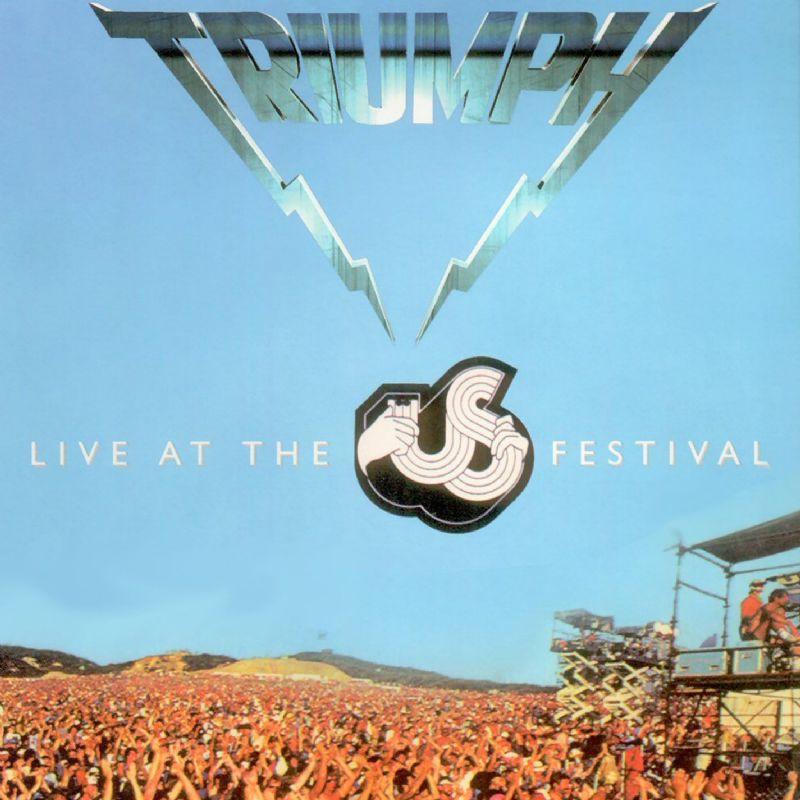
Live at the Us Festival is a live album and DVD by Canadian rock band Triumph, released in 2003. The massive Us Festival took place over three day's outdoors in San Bernardino, California from May 28–30, 1983. Triumph appeared on May 29, which was billed as "Heavy Metal Sunday" and included Ozzy Osbourne, Judas Priest, Scorpions, Mötley Crüe, Quiet Riot, and Van Halen. The number of attendees varied during the three days, the crowd was estimated to be about 500,000 strong on "Heavy Metal Sunday". The documentary style part of the DVD gives a behind-the-scenes look at how their shows are put together, everything from lighting, pyro, smoke, and lightning techniques are explained. Rik Emmett explains their songwriting process in his home. They interview celebrities like Ronnie James Dio that are at the show. Two videos are included, "Spellbound," and "Follow Your Heart," which showcases a live performance. All in DTS Surround Sound. Also Gil Moore and Mike Levine reminisce about the performance in a fifteen-minute interview from 2003.


Saturday, May 3, 2014

Mangala Vallis - Italian Progressive Rock


O grupo Mangala Vallis foi formado em 1998 por Gigi Cavalli Cocchi (ex-baterista do Ligabue, ClanDestino e CIS), Mirco Consolini (guitarra e baixo) e Enzo Cattini (teclados). O nome foi inspirado em um cânion de Marte citado no livro Sphere de Michael Crichton. O grupo é inspirado no rock progressivo dos anos setenta, seguindo os passos do Genesis de Peter Gabriel, mas enriquecendo suas próprias criações com vários outros elementos, resultado das muitas experiências artísticas dos membros da banda. As principais características da sua produção são os cuidados e pesquisa de sons usados​​.
Mangala Vallis biography http://www.progarchives.com/artist.asp?id=452 )
MANGALA VALLIS is a new progressive rock band from Italy, whose members are three well-experienced musicians: Gigi Cavalli Cocchi (drums), Enzo Cattini (keyboards) and Mirco Consolini (guitar and bass). Completely in love with the sound of the early 70's, MANGALA VALLIS is influenced by the music of that golden era, even if its music is filtered through its own taste and vision. Some symphonic prog lovers will notice that they mix styles of vintage GENESIS and GENTLE GIANT, while adding some Fish-era MARILLION and SPOCK's BEARD influences. 


Thanks Peter!